My Music Video

My Website

Wednesday, October 30, 2019

Blog Post 3: Regulation in the Music Industry

Since music is distributed on multiple platforms (radio, physical CDs, internet, used in TV shows/films) a number of different regulatory bodies are responsible for different aspects of its regulation and censorship.

Independent companies are responsible for copyright and royalties, such as:

-MCPS (Mechanical Copyright Protection Society)
-PRS (Performing Rights Society)
-Songrite UK (Copyright Office)

Ofcom can reprimand TV and Radio broadcasters for playing songs and music videos that breach its guidelines on harmful or offensive content pre-watershed.


In order for a piece of music to be used in film or television, a synchronisation license must be paid by the production to the label/artist, which clears copyright.


There is also the Parental Advisory label introduced by the Recording Industry Association of America (RIAA) and adopted by the British Phonographic Industry (BPI, of which the Big Three - Sony, UMG, Warner - are a part of).

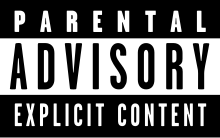
British Phonographic Industry - Wikipedia


These are placed on hard copies of audio recordings containing profanity or inappropriate references so that parents could be informed of material on albums that may be unsuitable for their children. Some online music stores also use this label such as the iTunes store. Additionally, Spotify indicate whenever a song contains explicit language with an "Explicit" label.

The Spotify 'Explicit' label that appears next to songs containing profanity
YouTube is a major means of distribution for music videos and are the main way that 16-25 year olds watch them. It is where my finished music video will be uploaded, hence looking into their content policies is crucial.
Youtube Content Policies - Pg 1 - Please Click to  Expand
In summary, what is not allowed:
- Sexually explicit content
- Videos showing harmful or dangerous acts, particularly ones encouraging kids or viewers to do the same
- Content promoting violence against an individual or group based on religion, race, gender, sexuality, disability, age etc.
- Violent or gory content primarily intended to be shocking, sensational or gratuitous.
- Cyberbullying: abusive comments or videos 
- Spam and scams


Youtube Content Policies - Pg 2 - Please Click to  Expand

- Things like predatory behavior, stalking, threats, harassment, intimidation, invading privacy, revealing other people's personal information

- Infringing copyright
- Accounts established to impersonate another channel or individual


Additionally, Youtube and Vevo are working with the BBFC to rate music videos on the site. All music videos by artists signed to Sony Music UK, Universal Music UK, Warner Music UK and all UK independent labels that are unsuitable for children under 12 will be classified with a BBFC age rating, which is displayed next to the video when it is published on YouTube. This isn't required by law, however it means the companies have more integrity (as we found to be one of Sony's values in Post 1) and provides peace of mind for parents.


In order to ensure my video was suitable for audiences of 16+, as per the brief, I would not include anything that could be considered inappropriate such as smoking, drinking, sex or profanity. It also means I will generally stay away from party or club settings/scenarios in my music video, on one hand to avoid breaching these policies, on the other hand, if I were to "dumb down" these party scenarios (i.e. have no drinking) it would be unrealistic and unfaithful to the age group of my target audience and the characters in the narrative, which could alienate viewers.

Blog Post 2: The Role of the Internet in the Music Industry

16-25-year-olds would have been living and growing up with technology and the digital age all their lives, and the internet, like it or not, has permeated every aspect of our lives. Therefore it has become a crucial tool for artists to digitally converge their brand across multiple platforms, and most importantly, to reach their audiences and sell their products.

The emergence of the internet and streaming services and the changing listening habits this has brought about has meant that labels and artists can no longer rely on high-street CD sales to make profits. They have to use the internet to find new ways of engaging fans and creating more methods of monetisation. Web 2.0 and social media has resulted in a much more active generation of internet-users and the rise of prosumers, where instead of passively consuming content, users want to create and be part of a community where they can chat with other fans and interact with the artist.


SONY Music's homepage is digitally converged, featuring; a scrolling gallery of their featured artists hyperlinked to the respective artists' websites; a list of all the subsidiary labels, also presented visually through logos and hyperlinked; last but not least, featured music videos with embedded YouTube links


George Ezra's online presence is another good example of digital convergence. From the landing page on the website showing George grinning at you directly, the brand is clear - it's all about you, the fans. The menu bar links onto social media, videos, photos, a Journal, shop page, all outlets through which the fans can engage with the artist. And on all the platforms, George's friendly, down-to-earth and homegrown personality is presented.


Photos with Fans


Journal so you can keep up with George


Everything is here. Links to social media, youtube, podcast, multimedia...


Music video on YouTube. Again, the fans are the focus


Direct Address. A friendly wave to visitors on the website.

Researching the role of the internet in the music industry has informed me on the importance of digital convergence and a strong online presence with synergy across all platforms for when I create my own website and social media, in conjunction with the music video, all while being under the Sony Music label. I intend to cross-promote between platforms in order to generate traffic across all of them while maintaining a consistent look and feel, creating a sense of familiarity as well as, hopefully, fun among fans. On the website, there will also be a push to buy merch, in order to support the artist outside of CD sales.

Blog Post 1: The UK Music Industry

The music industry in the UK is huge and thriving, contributing around £4.5bn to the UK economy in 2017. UK acts such as Ed Sheeran, Rag'N'Bone Man and Dua Lipa were among the world's biggest-selling acts and UK music exports were worth about £2.6bn. Understanding how and why the music industry, and in particular Sony Music and the genre of pop, are so successful would provide key industry context and insight that would influence the initial ideas for my own production(s).

The UK's "Big 4" major record labels are:
New Digs For Sony Music/Los Angeles | AllAccess.comEMI Music Publishing | Mayr's Organizational Management

Warner Music Group - WikipediaHAVAS GROUP AND UNIVERSAL MUSIC GROUP FORM GLOBAL MUSIC ...


Sony Music Entertainment (SME) is an American global music conglomerate owned by Sony Corporation of America. It is the second-largest of the Big 4, coming behind UMG.

Though owned by SME, Sony Music UK has standalone operations in the UK aimed at promoting musicians within and from the UK. It has had major successes with British artists such as Paloma Faith and Mark Ronson, and in 2014 and subsequent years Sony Music artists have been sweeping up awards at the BRITs. 

Sony's Values
The record label model is secure but also restrictive, with artists signing onto contracts for a period of time or until a certain amount of singles/albums are released. While being signed onto a major label means the artist will get representation, exposure and sales, this could be at the expense of artistic freedom and individuality; labels would often require artists to keep to a strict image or persona in order to be a good representation of the label's values, and sometimes favour music that is commercially viable rather than what the artist really wants to produce, or more new and challenging material.

Knowing Sony Music's huge influence and track record gives me an idea of the level of professionalism and branding that would be expected from such a big company, so I will need to reflect that in my productions. I also have more of an idea of my star persona, and why Sony would give them a record deal with so many artists out there dying for one. My artist's persona will apply to all of Sony's values: he will demonstrate Dreams and Curiosity through his innovative music video and enigmatic personality, he is Diverse in his musical ability as well as multi-ethnic background, he will show Integrity and Sincerity in his fan interaction and lyrics, and last but not least he will promote Sustainability through being an environmentalist.

Friday, December 14, 2018

Blog Post 20: Closing Post

Dear Moderator,

I wish you a warm welcome to my Media AS NEA blog. On the right as well as at the bottom of this post, there is a label called "AS Research and Planning", in which you will find the 20 blog posts for my NEA.

Emmanuel Li (3113)

This blog is now closed.

Blog Post 19: My Finished Adverts

Here are my finished adverts:


Overall I am very happy and proud of both adverts. The process has been tough and stressful, but enjoyable and satisfying nonetheless. I had a great time working with the actors and crew and they have all messaged me saying they have enjoyed the experience too. The final adverts have the pace and snappiness I wanted them to have, and the humour is portrayed excellently by the actors. There are definitely some issues, such as inconsistent colour, awkward sound mix in places, and one continuity error, but I am happy that there are, for it is a learning experience and I shall keep these things in mind for future projects.

Blog Post 18: My Target Audience Feedback

I got feedback mainly through private messaging on social media. I messaged a few of my friends (aged 16-17) through Instagram, 2 male and 2 female, the day after the adverts were uploaded to Youtube.
The responses I got were largely positive, with many people commenting on how they liked the fast-paced editing, the acting, the camerawork and the humour. Some people felt the intertextuality should have been made clearer and a few people noted the inconsistent colour grading of Advert 2 (owing partly to the temperamental weather). It was also pointed out to me that there was a continuity error in Advert 2, where the YourFood logo on the cyclist's bag is not on the bag in the shot where he cycles across the screen.
Here is an example of a feedback session (with a 16 year old male):

In future, I will try and choose locations and times where weather conditions are more stable, and in post, I shall spend more time on colour grading to create a consistent look. I would also work more on sound mixing and pay greater attention to continuity.

Blog Post 17: My Adverts Review

Having a review copy meant that I could get feedback from my class and my teacher regarding any final post-production changes I could make.


After the review session and discussion with my classmates, I decided to make these final changes:
- Align the dubbing of dialogue and some of the voiceover differently in Advert 1
- In advert 2, change the colour grading so it is more consistent and brighter.